Designing Personal Leadership Development Pathways
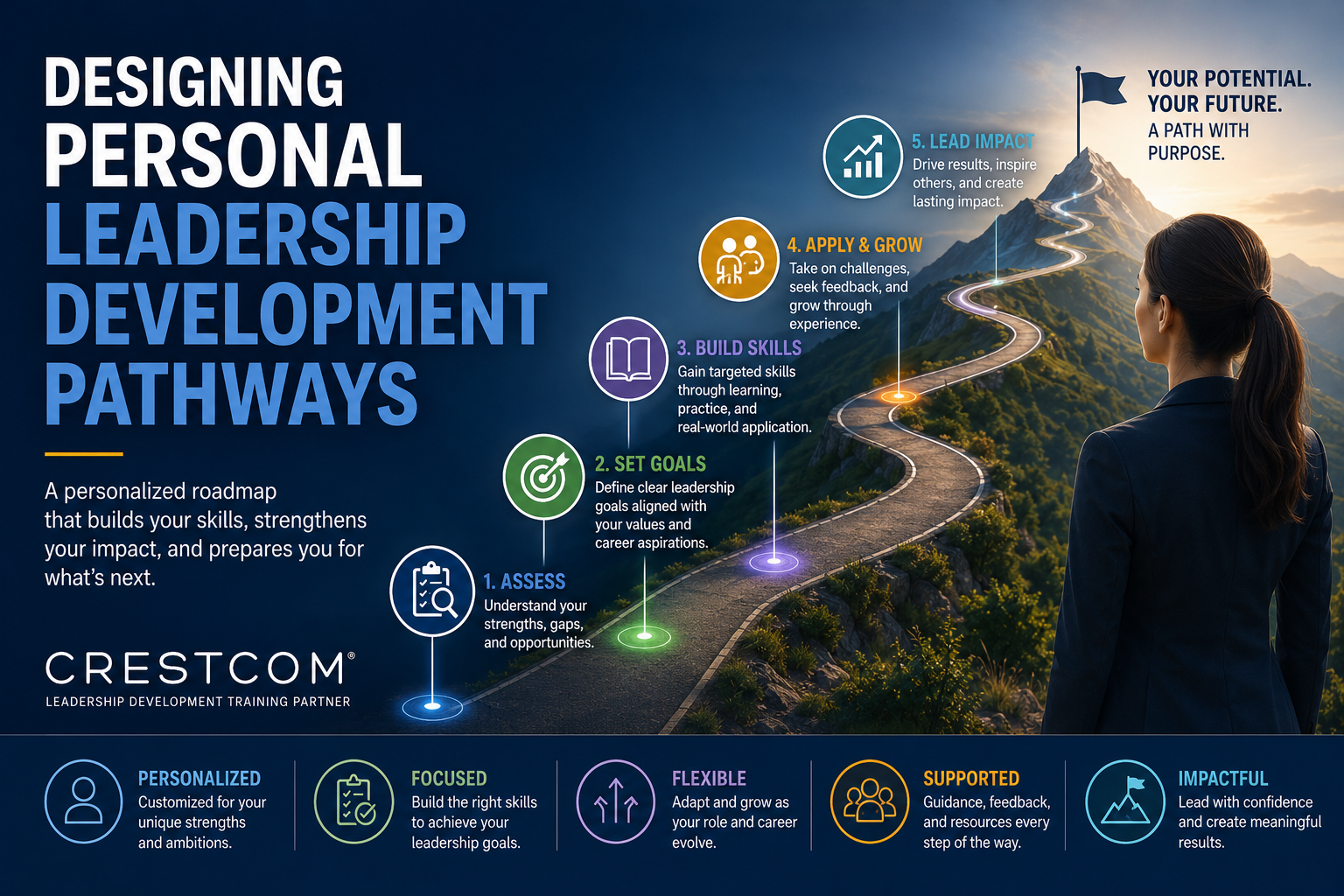
Leadership assessment and 360° feedback provide valuable insight into current capability—but insight alone does not create growth. The real impact of leadership development begins when organizations translate feedback into structured, personalized development pathways.
In today’s dynamic business environment, leaders face different challenges based on their role, experience, and organizational context. As a result, one-size-fits-all training approaches are no longer effective.
Designing personal leadership development pathways ensures that leaders grow intentionally, progressively, and in alignment with both organizational goals and individual career trajectories.
What Are Personal Leadership Development Pathways?
A personal leadership development pathway is a structured roadmap that outlines how an individual leader will grow over time.
It integrates:
- Leadership competencies
- Development goals
- Learning experiences
- Coaching and feedback
- Career progression milestones
Unlike generic training programs, these pathways are tailored to the individual—ensuring relevance, engagement, and measurable outcomes.
Why Personalised Development Planning Matters
Organizations that invest in personalized leadership development consistently outperform those that rely on generic training models.
Key benefits include:
- Higher engagement: Leaders feel invested in when development is tailored to their needs
- Improved retention: Career growth opportunities reduce turnover
- Faster capability building: Focused development accelerates learning
- Stronger leadership pipelines: Clear pathways prepare future leaders
According to research from McKinsey & Company, organizations that align leadership development with individual growth paths are significantly more likely to build strong leadership pipelines¹.
This aligns with insights from Crestcom’s article on Bridging the Engagement Gap: How Leadership Development Programs Can Boost Employee Commitment
Linking Leadership Competencies to Career Progression
Effective leadership development pathways are grounded in competency frameworks and aligned with career progression.
How this works:
- Early-stage leaders: Focus on communication, accountability, and team management
- Mid-level leaders: Emphasize strategic thinking, delegation, and cross-functional leadership
- Senior leaders: Develop vision, innovation, and organizational influence
This competency-based progression ensures that leaders are prepared for increasing responsibility—not just promoted based on tenure.
Crestcom explores this structured approach further in Mastering Leadership Development: Step-by-Step Guide to Creating Future-Ready Leaders
How to Design Effective Leadership Development Pathways
Step 1: Start with Assessment Data
Use 360° feedback and competency assessments to identify strengths and gaps.
Step 2: Define Development Priorities
Focus on 2–3 high-impact competencies.
Step 3: Map Learning Experiences
Combine:
- Training programs
- Coaching sessions
- Stretch assignments
Step 4: Align with Career Goals
Ensure development supports both organizational needs and individual aspirations.
Step 5: Track and Adjust Progress
Use regular feedback and performance reviews to refine the pathway.
This structured approach aligns with Crestcom’s methodology of monthly reinforcement and real-world application.
Real-World Examples of Leadership Development Pathways in Action
Example 1: Google – Personalized Leadership Growth Through Data
Google integrates leadership development pathways into its broader talent ecosystem.
How the model is used:
- Google uses performance data and feedback (Project Oxygen) to identify leadership capability gaps.
- Leaders receive personalized development plans based on these insights.
- Development includes targeted training, coaching, and role-based experiences.
- Progress is tracked through continuous feedback cycles.
Impact:
Improved manager effectiveness and team engagement.
Crestcom alignment:
This mirrors Crestcom’s approach of turning feedback into
actionable development plans with continuous reinforcement.
Example 2: Unilever – Leadership Pathways Linked to Purpose & Performance
Unilever uses a structured leadership framework that integrates purpose-driven leadership with competency-based development.
How the model is used:
- Leaders are assessed against competencies tied to performance and organizational values.
- Development pathways are tailored to leadership level and business function.
- Programs combine formal training, coaching, and global leadership experiences.
- Leadership growth is linked directly to career progression and succession planning.
Impact:
Stronger leadership pipelines and consistent leadership behaviour globally.
Crestcom alignment:
This reflects Crestcom’s belief that leadership development must be
aligned with both performance and purpose.
Example 3: IBM – Continuous Leadership Development Through Skill Pathways
IBM focuses on continuous leadership development through structured skill pathways.
How the model is used:
- Leaders follow personalized learning journeys aligned with evolving business needs.
- Digital learning platforms and coaching support ongoing development.
- Competency progression is tied to career advancement and leadership readiness.
Impact:
Enhanced agility and leadership capability in a rapidly changing industry.
Crestcom alignment:
Crestcom similarly emphasizes
continuous, applied leadership development rather than one-time training events.
What These Examples Show
Across industries:
- Leadership development is personalized, not generic
- Competencies are linked to career growth
- Feedback drives continuous improvement
Organizations that follow this model move beyond training—they build leaders who consistently perform and grow.
Embedding Personal Development Pathways into Leadership Systems
For development pathways to succeed, they must be integrated into the broader leadership system:
- Linked to performance management
- Reinforced through coaching
- Supported by leadership training programs
- Continuously evaluated through feedback
This systems-based approach ensures leadership development remains relevant, measurable, and scalable.
FAQs
1. What is a personal leadership development pathway?
A structured plan that outlines how a leader develops skills and competencies over time.
2. Why is personalized leadership development important?
It ensures relevance, improves engagement, and accelerates leadership growth.
3. How do competency models support development pathways?
They define the skills and behaviours required at each leadership level.
4. How often should development pathways be updated?
Typically every 6–12 months, based on performance and feedback.
5. Can leadership development pathways improve retention?
Yes, clear growth opportunities significantly increase employee retention.
Citations & References
- Harvard Business Publishing.
How to Create a Successful Leadership Development Program.
https://www.harvardbusiness.org/insight/how-to-create-a-successful-leadership-development-program/ - McKinsey & Company.
The Leadership Gap: Building Leadership Capability for the Future.
https://www.mckinsey.com/capabilities/people-and-organizational-performance/our-insights - Forbes.
Why Personalized Leadership Development Is the Future of Work.
https://www.forbes.com/councils/forbescoachescouncil/2025/06/20/leading-in-the-ai-era-why-human-centered-leadership-is-the-skill-of-the-future/ - Nielsen.
Global Talent Trends and Employee Engagement Insights.
https://www.nielsen.com/about-us/responsibility-and-sustainability/report/ - Unilever.
Leadership Development and Purpose-Driven Growth Framework.
https://quarterdeck.co.uk/articles/what-leadership-style-does-unilever-use/
What’s Next in the Leadership Development System Series
Designing personal leadership development pathways ensures leaders know what to improve and how to grow. But sustainable leadership development requires more than structured plans—it requires continuous reinforcement.
In “Continuous Leadership Development: Beyond Episodic Training,” we explore how organizations move beyond one-time training events to build ongoing leadership capability through continuous learning, coaching, and real-world application.
➡
Continue the series:
Continue Expanding Your Leadership Perspective
"Great leaders never stop learning."
Explore more expert insights, proven frameworks, and actionable strategies on Leadership Development designed to elevate your leadership impact.
Interested in a free Leadership Skills Workshop with your team?
- Address instantly fixable issues that impact customer perceptions and employee morale.
- Learn and practice a habit that will raise employee performance.
- Set actions with specific and measurable steps that they'll gladly be accountable to achieve.